
Intro Story
Welcome back. Last week, we introduced one of the central ideas of this course: like athletics, excellence in meditation is built from small, ordinary skills practiced with great care.
Daniel Chambliss called this “the mundanity of excellence.” What looks from the outside like an extraordinary capacity is actually built from simple actions deeply refined through deliberate practice.
This week, we will begin breaking meditation down in exactly the same way.

A helpful starting point comes from a 2012 study that aimed to understand mind wandering during meditation in much finer detail. To do so, researchers began by reviewing traditional meditation manuals.
They then combined these descriptions with existing neuroscience research on mind wandering and attention. From this, they developed a model with four phases. First, the mind wanders. Second, you become aware that the mind has wandered. Third, you shift your attention back to your object of focus. And fourth, you sustain that focus.
To test this model, the researchers then asked experienced meditators to focus on their breath while lying in an fMRI scanner. Each time a meditator noticed that their mind had wandered, they pressed a button and then returned to focusing on their breath.
The researchers then analyzed the brief windows of brain activity surrounding each button press and matched them to the four phases. They found that the brain data closely aligned with the meditation manuals and broader neuroscience literature, with different brain regions associated with each of the four phases.
Mind wandering is a cycle, not a failure
Models like this help us distill meditation into distinct, trainable skills, allowing for a much deeper engagement with the practice. By analogy, progressing beyond a basic tennis serve requires individually refining the stance, ball toss, swing, and follow-through, just as advancing in yoga requires separate, careful attention to factors like foot placement, hip alignment, posture, and gaze.
Without clarifying the component skills in this way, mind wandering often becomes a source of frustration and is one of the most common reasons people struggle with meditation and stop practicing.
Many people think, “I can’t stop my thoughts,” because they falsely assume meditation should completely quiet the mind from the outset. When thoughts and distractions inevitably continue to arise, they feel that they are meditating incorrectly, conclude, “I can’t do this,” and stop practicing.
In this class, we’ll break down the practice of lovingkindness meditation into six specific skills grounded in familiar experiences. The good news is that these skills are both ordinary and learnable. Practiced with care, they can become the foundation for profound changes in how we relate to our minds and our everyday lives.
Introductory meditation instructions
The practice at the center of this course is loving-kindness meditation, which we’ll abbreviate as LKM. It trains us to cultivate warmth and kindness and to return to them skillfully whenever the mind wanders.
Just as a tennis serve has several parts, lovingkindness meditation is comprised of six core meditative skills.
To begin, we spark a feeling of warmth and a kind intention, using a simple memory, phrase, felt sense, or image. Then we savor that warm, positive feeling in the body.
We stay with this warmth until our attention inevitably drifts away from it. At this point, we have an opportunity to cultivate a warm relationship to the mind wandering itself, making it an integral and rewarding part of our practice.
Working with mind wandering skillfully is broken into 4 additional skills: first, recognize the distraction. Second, relax any tension within your mind and body. Third, ease into a feeling of relief at letting go of the distraction with a small smile. And fourth, return to savoring, allowing yourself to absorb back into the warmth and kindness.
Together, these six skills create a practical framework for cultivating loving-kindness and developing meditative fitness.
6 Core Skills
Before we dive into the details of each of these skills individually, let’s review why we’ve chosen warmth and kindness as our object of meditation.
Kindness and warmth meditation as skill building
Extending the exercise metaphor, LKM functions like a whole-body workout. We chose it as the focus of this class because it engages all the major components of meditative fitness, and is particularly well suited to caregiving professionals.
To briefly recap from Class 1, meditative fitness consists of three broad families of skills. The attentional family cultivates monitoring and focusing; the constructive family builds warmth and compassion; and the deconstructive family trains letting go. While many other types of meditation might be more specialized, LKM engages all three at once.
Through this broad focus on multiple skills, we hope to help you develop a balanced meditation practice. Just as a well-chosen exercise program can build strength, endurance, and mobility at the same time, this style of meditation develops several capacities simultaneously.
Families of meditative skills and their related sub-skills
- Monitor / recognize focus
- Naming and noticing
- Sensory sharpening
- Narrowing and broadening awareness
- Decentering (story → sensation)
- Warmth and kindness
- Compassion
- Appreciative joy
- Equanimity / acceptance
- Allowing, softening
- Savoring, sparking
- Releasing
- Relaxing
- Letting go
- Forgiving
- Unclenching (releasing grasping/craving)
In addition, we chose LKM because many people find it intrinsically rewarding, which helps generate motivation to continue practicing.
For these reasons, we believe LKM offers medical professionals a welcoming, accessible entry point into deeper meditative training. It also provides practical support for navigating the common obstacles that arise early in practice.
Don’t worry if you find it challenging at first. In Classes 3 and 4, we will learn to work skillfully with difficult emotions and distractions, before investigating more advanced states of absorption in Class 5.
This course is designed to meet you where you are. It is suitable for both complete beginners and more experienced meditators, offering a gradual path toward more advanced practice. Just as a well-designed exercise program can accommodate both new walkers and experienced runners, this course provides room for everyone to progress. No matter your starting point, growth comes from deliberately practicing these simple skills with patience and care.
Cultivating warmth as an evidence-based foundation for advanced meditation
With this gradual progression in mind, let’s examine why cultivating warmth provides a strong foundation for meditation. Scientific research increasingly shows that kindness and compassion are not fixed traits, but measurable and trainable capacities that can reshape both mind and body.
The broad pattern of findings is encouraging. Systematic reviews and clinical trials indicate that loving-kindness and compassion meditation can increase positive emotion, mindfulness, and life satisfaction while also reducing symptoms of depression and anxiety.
Even brief practices can produce immediate increases in social connection and positive emotion, while sustained training may build more durable internal resources, including meaning, resilience, physiological regulation, and well-being.
More recent research strengthens the case that these benefits arise through training. A 2024 systematic review and meta-analysis found that LKM interventions increased positive emotions, mindfulness, compassion, and reduced adverse psychological symptoms.
What that looks like inside a single program: participants who completed an eight-week Mindful Self-Compassion course — a close cousin of the practice in this class, built from the same family of warmth practices — gained in self-compassion, mindfulness, and life satisfaction, while depression, anxiety, and stress fell over the same weeks.
Self-compassion training improved wellbeing and reduced distress
Experimental research points in the same direction. A randomized controlled trial found that compassion cultivation training, a practice similar to loving-kindness meditation, increased mindfulness and happiness while reducing worry. Participants who practiced more also tended to experience greater improvements, further suggesting that these capacities strengthen through repeated practice.
The broader evidence base consistently supports these benefits, with systematic reviews and meta-analyses linking LKM to reduced depression and anxiety and greater life satisfaction.
With this evidence in view, let’s clarify exactly what we mean by “warmth” in the context of LKM.
Two sides of warmth: the wish and the feeling
Before we continue, it is important to clarify what we mean by using loving-kindness as the object of meditation in this course. We are referring to a specific quality of mind and body that we learn to evoke, and feel deeply.
A common mistake in LKM is to treat phrases such as “May I be happy” or “May you be safe” as the primary object of meditation. In this course, phrases, memories, and images are used as prompts to spark the intention and felt experience of loving-kindness, which then become the true focus of practice.
This experience has two closely connected dimensions: the wish and the feeling.
The wish is a sincere intention for yourself or others to experience well-being, safety, happiness, and ease.
The feeling is the way that intention becomes tangible in your body, perhaps as warmth or openness in the chest, a softening of the face and shoulders, or relaxation spreading through the body.
Once the wish and feeling arise, the prompt can fade into the background, or we can let go of it completely. The intention or wish gives the practice direction, while the bodily feeling gives attention something tangible to rest in, and savor.
This distinction will remain important throughout the course. Whether we are working with warmth, gratitude, forgiveness, or compassion, the aim is not simply to repeat words or understand ideas.
Just as we would never mistake the menu for the entrée, we should not mistake the prompts for the practice itself. The prompts help us find the experience, but the sincere intention and directly felt experience are what we learn to cultivate.
Five key principles for learning meditation
Now that we have introduced warmth as our meditation object, we can step back and consider a broader question: what helps people learn meditation well?
The five principles that follow provide a general framework for developing meditative skill. Although we will be applying them to loving-kindness meditation, they would support learning across all forms of meditation practice.
The five principles:
- Focus on quality. We’ll attend increasingly closely to the subtle details of practice rather than simply accumulating more minutes.
- Recipe over review. We’ll prioritize the nuts and bolts of how to practice over descriptions of what the results should feel like.
- Playful experimentation. We’ll approach meditation with a spirit of curiosity, awe, continual refinement, and childlike enjoyment.
- Sensitivity to “near enemies.” We’ll learn to recognize distortions that mimic genuine meditative skills, such as confusing drowsiness with relaxation.
- Staying connected to aspiration. We’ll allow our deeper values and intentions to guide and sustain the practice.
Let’s take these one by one.
Focus on quality
Let’s begin by looking at the quality of our practice.
Progress in meditation is not simply a function of time spent, and the benefits do not magically accrue just by sitting there. Anecdotally, we’ve observed practitioners who focused deeply on meditation quality and accordingly made dramatic progress within a few short months or years. In contrast, we have also encountered meditators who reported very little progress after decades of less deliberate practice.
Throughout this course, we will use the term “skillful” to describe this focus on quality, characterized by subtle attunement to core meditative skills.

Emerging research on meditation quality supports this emphasis. In these studies, higher-quality practice is defined as repeatedly returning to present-focused attention with an accepting, nonresistant attitude. This quality of engagement predicts better psychological outcomes more strongly than the amount of time spent meditating. Practice matters, but how we practice matters more.
That said, any skill takes time to master, and time spent in practice is where that refinement happens. In mindfulness-based interventions, this improvement in quality helps explain why greater practice time leads to better outcomes. Importantly, quality appears to play a causal role in driving these benefits. Recent research suggests that improvements in practice quality tend to come before the benefits, including improvements in mindfulness and reductions in anxiety and stress.
The same pattern appears in research on LKM and compassion focused meditation. The ability to evoke and sustain warmth and compassion predicts greater well-being, more positive attitudes toward others, and increased self-compassion. As with research in mindfulness, the benefits of LKM hinged more on measures of quality than on frequency.
Average practice quality improved gradually over seven weeks
Recipe over review
In addition to failing to focus on quality, we believe that many people struggle to learn meditation because they confuse “reviews” of skilled practice with concrete “recipes” for developing it.
Consider the instruction, “be calm and present.” It describes what skilled meditation may eventually feel like, but it does not necessarily help practitioners identify learnable skills to get there. In this sense, it is more a positive “review” of the desired state than a “recipe” for cultivating it.
Without clear guidance, when most people initially try to be calm and present they fall into one of two patterns: they either tense up and try to control their experience by pushing distractions away, or they mistake passive daydreaming for meditation.
As we will discuss throughout this course, both tension and daydreaming move away from the clear ease and openness that “being calm and present” is meant to describe.
We believe that what practitioners need instead is a “recipe”: a sequence of specific, learnable skills that gradually cultivates calm and presence. Accordingly, we encourage you to focus on practicing the skills that move toward the desired states, rather than fixating on what the final result should feel like.
That said, reviews can still have their place. Descriptions of the benefits and results of skilled meditation can sometimes help practitioners recognize progress and orient toward what is possible. However, their value ultimately depends on being paired with a practical method for getting there. As we have been discussing, learning requires breaking the practice into concrete skills and refining them over time.
Playful experimentation
Once we have a clear recipe, the next step is to approach it playfully and experimentally, learning how each skill works in our own experience.
Far from being frivolous, play is an important part of how adults learn and adapt. For instance, research suggests that voluntary, intrinsically motivated play can foster increased creativity, resilience, and adaptability. Consistent with this view, the psychologist Peter Gray (2017) defines play as an activity that is self-chosen, imaginative, and focused more on process than outcome. We invite you to bring this same spirit to meditation.
In cultivating a playful attitude, we recommend letting go of any idea that the practice needs to be done perfectly. Instead, we encourage you to approach it as a series of small, low-pressure experiments. Make slight adjustments as you go, carefully observing how each one affects your experience. For instance, you might try using less effort, relaxing your eyes, or attending more closely to the feeling of warmth in your chest.
Playfulness also helps us navigate uncertainty. Learning meditation isn't always clear, and there will be moments when you're not sure what to do next. A common reflex at that point is to reach for concepts. In contrast, a curious, open attitude connects you to what is actually happening in the moment. This allows you to adjust based on direct experience rather than on ideas about what meditation should be.
By analogy, an experienced chef does not learn merely by reading recipes or talking about cooking. They play with the dish itself, tasting it repeatedly and making small changes in seasoning, heat, and salt.
Similarly, meditation develops through close attention to what is actually happening, followed by small experiments and careful observation of their effects. By approaching these small adjustments with curiosity and enjoyment, we become increasingly active participants in our own learning.
As our observation becomes more careful, our discernment sharpens. We begin to distinguish genuine meditative skills from subtle imitations. This brings us to the idea of “near enemies.”
Sensitivity to “near enemies”
As our practice becomes more refined, we learn to see through superficial resemblances between genuine meditative skills and unskillful states. For instance, we may realize that what we initially thought was relaxation was actually mixed with dullness. Over time, we learn to recognize these misunderstandings in increasingly subtle forms on a second to second basis.
Contemplative traditions call these confusions “near enemies.”
Near enemy: an imitation of a meditative skill that lacks aspects of the target meditative skill or blends in unskillful craving, aversion, dullness, or confusion.
The key point is that although these near enemies can appear similar in some ways, they differ in both intention and effect. Dullness and relaxation, for instance, are similar in that they both reduce arousal. However, genuine relaxation leaves your mind fresh and present to detail, while dullness is hazy and unclear.
Working with near enemies involves continually deepening refinement and learning to distinguish ever subtler differences between wholesome and unwholesome states. Dullness may initially resemble relaxation, but with practice we learn to deepen relaxation while recognizing and releasing increasingly subtle dullness.
A further complication is that meditative skills often have several near enemies. For example, relaxation can also be mixed with craving and striving for relaxation.
For each core skill in this course, we'll point out the most common near enemies that accompany it. This will help you spot these unskillful patterns early, allowing you to reorient and recalibrate toward the genuine skill.
Because each person brings different habits and sensitivities to practice, to do this effectively you will need to study your experience closely and discover the subtle ways near enemies arise in your own body and mind.
Every near enemy fails in one of four ways — and most blend two or three. Whenever we chart the near enemies of a skill in this class, small icons carry this classification, and hovering any icon gives its definition. The schema runs across every skill in the course, from sparking warmth to forgiveness.
Trying to seize, intensify, prolong, control, or accelerate a positive experience or outcome, rather than gently inclining toward it and allowing it to unfold.
Trying to resist, suppress, control, or escape an unwanted experience, rather than meeting it with warm acceptance and equanimity and letting it pass naturally.
Losing sensitivity to the fine-grained, rapidly shifting details of present experience, allowing attention to become dull, unclear, and less responsive.
Blending an additional unhelpful process into the intended skill or substituting a counterfeit process for it.
If left unrecognized, near enemies can seriously undermine practice, sometimes for years. For this reason, an absolutely crucial component of learning meditation is continuously discerning which near enemies are currently limiting your progress. Once you’ve identified them, you can then experiment with how to deliberately cultivate the intended skill, and weed out any unwholesome mental activity that you have been blending in.
- Reduces arousal by releasing unnecessary tension
- Stays in close contact with what is happening
- Preserves sharp mental clarity and presence
- Reduces arousal, just as relaxation does
- Adds an unwholesome distancing from experience
- Leaves the mind foggy and disengaged
Even when we understand the value of careful discernment, sustaining the motivation it requires can be difficult. In our final principle, we’ll explore how reconnecting with our deeper aspirations can renew our motivation, energy, and focus.
Staying connected to aspiration
Sustaining the care we bring to discerning near enemies invites a broader question. Why are we practicing in the first place?
At first, meditation may serve as a remedy for stress or burnout, and we fully support these motivations. At the same time, it can be valuable to ask what you are moving toward, not only what you are trying to move away from. What qualities do you hope to cultivate? How would you like to relate to yourself and to others? You may hope to develop more warmth, compassion, equanimity, or kindness. These aspirations do not need to be grand, what matters is that they are genuinely meaningful to you.
Over time, your aspirations can also become clearer. Research suggests that while many people begin meditating primarily for stress reduction or health, their motivations frequently expand to include self-understanding, balance, and service.
Connecting with these broader aspirations can also help when practice gets difficult, as altruistic motivations are associated with more sustained meditation practice than stress reduction motives alone. For many healthcare professionals, this broader orientation may already feel familiar. As we discussed in class one, many are drawn to medicine by the wish to relieve suffering and help others.
Putting this into practice, it can help to briefly reconnect with our aspirations before and after each session. To start each session, you might say something like, “May this practice help me cultivate greater clarity and kindness.” To make it more concrete, it can also help to connect with specific people such as children, partners, or others we are in close day to day contact with. At the end of each session, you might close with, “May the benefits of this practice contribute to the well-being of myself and others.” This helps keep our practice grounded in everyday life and service.
Now, having explored the foundations that support meditation practice, let's examine the specific skill components of loving-kindness meditation one by one.
Sparking warmth with a kind intention
The first skill in lovingkindness meditation is sparking warmth. In this step we begin our meditation using a phrase, memory, or image as a starting point to help us generate warmth. Our aim here is not merely to think kind thoughts. Instead, we aim to evoke and connect with a bodily sense of warmth, tenderness, openness, and ease. Importantly, this feeling is not merely pleasant. It is grounded in a sincere and benevolent wish for ourselves and others to flourish.
Deliberately evoking and cultivating this feeling may be unfamiliar, but the lovingkindness itself is not an exotic or rarified spiritual attainment. On the contrary, the feeling is quite ordinary. We are simply referring to the warmth and fondness you might feel, for example, while watching a child you love unwrap presents on Christmas morning, joking with an old friend, holding a laughing baby, or cuddling with a puppy.
To begin lovingkindness meditation there are several supports we can use to help spark and connect with the warmth. Begin with an image, memory, person, or supporting phrase that easily evokes warmth. Experiment to find what works best for you.
If you work with a memory or image, we recommend that you experiment with picking a specific moment rather than a general impression. The sensory details can help make the memory much more evocative. Perhaps you remember picking chamomile flowers for your grandmother, or the time your dog greeted you at the door when you first returned from college. An imaginary scene can work the same way, like a sleeping baby animal curled up in the sun, or children laughing at the beach.
Experiment with engaging all your senses. Try evoking details such as the scent of salt air, the warmth and golden color of the sunlight, and the distinctive tones of laughter.
In lieu of images, some people also find it helpful to begin with phrases. Traditional lovingkindness phrases include “May you be safe,” “May you be happy,” “May you be healthy,” and “May you live with ease.” Sometimes a single word is enough.
However, when using phrases remember that you are not reciting a mantra. The phrases serve as reminders of your benevolent intention and as prompts for kindling the feeling of warmth. The primary object of meditation is this warmth, not the words themselves.
Once the feeling begins to arise, allow the phrase or image to fade into the background and give most of your attention to the feeling. However faint it may be, attend directly to its warmth, tenderness, openness, and ease, making that feeling your object of meditation.
With practice, the phrases, memories, and images may become less necessary. Many meditators gradually learn to access the feeling directly. Rather than creating something new, they simply tune into a warmth that is already present.
With time, the feeling can increasingly occur outside of meditation as well. This makes it more accessible when you sit to meditate. And, as the practice becomes more familiar, you can gradually extend the warmth toward more neutral and eventually difficult people or situations. Eventually you can radiate warmth in all directions, and toward all beings.
Don't worry if warmth doesn't come easily at first. Everyone struggles with this sometimes, and much of the rest of this course is designed to help you work with these challenges. Let's start by examining some of the common difficulties that arise when sparking warmth.
Near enemies of recognizing warmth
As we practice sparking warmth, we need to learn to distinguish genuine lovingkindness from states that merely resemble it. These near enemies differ either because they leave out actual warmth or because they blend it with agitation or craving.
- Phrases repeated mechanically, without their meaning
- Absorbed in a memory's details, barely noticing the feeling
- The support is engaged but the warmth itself is missing
- Soft, relaxed, or enjoyable but lacking benevolence
- Feels good, but the intention behind it differs
- Warmth wishes suffering beings joy and flourishing
- A vivid memory yields tenderness blended with agitation
- Warmth is present, so the whole state passes for it
- Restlessness is jittery; warmth is settled and smooth
- Goodwill mixed with wanting closeness or reassurance
- Hoping for reciprocation or a particular outcome
- The warmth is real, but craving comes along with it
- Directly felt rather than merely imagined
- Guided by goodwill rather than simple pleasantness
- Settled rather than agitated, and asks nothing in return
Two of these are worth teasing apart carefully. With restlessness, the aim is to separate the agitation from the warmth and relax it, so that the warmth underneath can be felt more clearly. With longing, the point is that genuine lovingkindness requires nothing of the other person. It simply wishes them well without demanding anything from them or from the world.
Recognizing these qualities is crucial for separating lovingkindness from the thoughts, sensations, and desires that often accompany it and prevent deeper meditation.
Near enemies of sparking warmth
Just as we can misrecognize warmth, we can also approach the process of evoking and initially connecting with it in unhelpful ways. These near enemies aim to spark warmth, but distort the process through force, craving for intensity, idealized expectations, or restless switching between supports.
- Straining to produce the feeling we think should be present
- Pushing away difficult thoughts, tightening, bearing down
- Aversion mixes in and the tension dampens warmth
- Straining for heightened bliss, love, or emotional drama
- A subtle response gets dismissed as not enough
- Chasing adds agitation and hinders development
- Reproducing how a loving person "ought to" feel
- An imagined state replaces the warmth actually available
- Practice becomes contrived rather than ordinary
- Switching phrase, image, or memory too quickly
- No single support gets time to work
- Practice degrades into scrolling a social feed
- Engages a support sincerely and curiously
- Softens unnecessary effort and expectation
- Gives ordinary warmth time to emerge on its own
A few of these deserve a closer look. Genuine warmth is ordinary, reflecting simple experiences such as the tenderness that arises when a child laughs or a puppy tumbles across the floor, so chasing after an exalted imagined state often prevents accessing this simple lovingkindness. And as we will explore in Class 5, radical bliss, peace, and joy can indeed develop, but only as a result of patient practice rather than strained pursuit. Experimentation with different supports can also be genuinely useful when we are searching for an effective entry point. It becomes novelty-seeking only when the restlessness itself takes over.
Across these near enemies, the central balance is between too little engagement and too much manipulation. In contrast, genuine sparking combines both naturalness and curiosity. We engage the support curiously and sincerely, soften unnecessary effort, and give warmth the time and space to emerge in its own way.
Savoring the feeling of warmth and allowing it to grow
Once warmth has been sparked, the second core skill of lovingkindness meditation is to clearly recognize and savor it. We practice deepening into direct, receptive, and appreciative contact with the feeling. We allow it to unfold without losing interest or trying to control it.

This process is similar to the way you might savor a delicious meal or a beautiful sunset. Savoring is a natural human capacity, but through meditation we can refine and train this ability. We can learn to recognize, appreciate, and deepen positive experiences with greater clarity and ease.
Savoring helps the initial spark of warmth become more steady, vivid, and enduring. Like other skills in this course, savoring is trainable, and extensive research supports its benefits.
Two phases of savoring:
- Actively turn toward the feeling. Gently bring your attention to the warmth in your body, and incline towards it with interest. Become genuinely curious about the feeling, investigating specific qualities. “Where in the body is it strongest? Does it glow, does it spread, does it pulse?” Feel the tiniest details of the positive sensations, and allow enjoyment to deepen.
- Shift into a more receptive attitude. Simply let the warmth be and allow yourself to sink into it with increasing ease and delight. Think of it less as striving for a peak experience, and more like slipping into a hot bath after a long day.
What you're learning here is a careful balance. You want to be curiously engaged with the feeling without becoming passive. You don't want to grab at it, which can stop it from growing naturally. Instead, allow it to change and deepen on its own. If the feeling thins or fades, it's usually a sign tension has crept in. When that happens, soften and relax. Don't push harder.
As you savor, the warmth often deepens and radiates outward on its own, allowing you to settle into a sense of effortless openness and appreciation. We'll cover this process in more detail in class five, when we turn to the science of meditative absorption.
Near enemies of savoring warmth
As the skill of savoring becomes more refined, we learn to distinguish genuine savoring from states that merely resemble it. These near enemies may seem similar, but they either weaken vivid contact with the warmth or distort it through evaluation, craving, or control.
- Warmth stays in awareness but isn't entered
- No curiosity, appreciation, or enjoyment
- Feeling doesn't deepen or grow more vivid
- A thought spins into a chain of associations
- Feels related, so it seems like still savoring
- Attention drifts into narrative, warmth recedes
- Judging if warmth is strong enough or growing
- Assessing whether we're "doing it right"
- Distance and evaluation replace immersion
- Trying to intensify, freeze, or hold the warmth
- Motivated by wanting the pleasant state to last
- Introduces craving and tension, constricts the feeling
- Vivid, direct, and receptive
- Draws close, lets enjoyment amplify the warmth
- Allows it to deepen, shift, or fade naturally
Taken together, these near enemies form a spectrum from insufficient engagement to meddling interference. In passive contact, we remain near the warmth without fully entering it. In storytelling, we are drawn away from the felt experience and into thought. In monitoring, we stand back and evaluate the warmth. In grasping, we try to intensify, preserve, or control it.
Genuine savoring avoids these extremes. It is vivid, direct, and receptive. We stay close to the warmth, remain interested in its evolving texture, and allow it to deepen, shift, or fade in its own way. The trick to skillful savoring is to learn to lean in with deep curiosity and enjoyment without introducing tension or control.
With a clearer sense of the skill, let's now review the emerging research on savoring.
Savoring pleasant sensations during meditation is a trainable skill
In the past twenty years, scientists have begun investigating savoring as a distinct and trainable skill. This research suggests that deliberately attending to positive experience can beneficially influence both how we feel in the moment and how we function over time.
Even brief savoring exercises can improve well being. In a randomized controlled trial, participants first completed a stressful social task and then practiced different forms of savoring. Focusing on positive experience in the present moment helped participants experience positive emotion. It was more effective than no intervention, neutral guided imagery, or savoring a memory.
Longer interventions suggest that the benefits of savoring can compound and extend beyond the immediate exercise. In one study, a week of savoring practice increased happiness, life satisfaction, and resilience, with many of these gains still evident three months later.
Consistent savoring practice increases the benefits
Across the broader literature, savoring has been associated with greater happiness, optimism, self-esteem, and life satisfaction, as well as lower depression. Intervention studies similarly suggest that training this skill can strengthen well-being and resilience while reducing distress and depressive symptoms.
Together, these findings suggest that savoring is not simply a personality trait or something that happens automatically when life is going well. It is a capacity we can deliberately develop. Through repeated practice, we become more fluent in recognizing positive feelings, sustaining attention on them, and allowing them to amplify and become more vivid.
As this capacity develops, attention can settle into warmth with less effort and greater enjoyment. At more advanced stages, this combination of steadiness, well-being, and reduced effort can help support profound meditative absorption, which we will examine more closely in Class 5.
Before attention can settle this deeply, however, we need to learn how to work skillfully with distraction. So far, we have explored our first two meditative skills, how to spark warmth and allow attention to settle into it. Next, we will learn how to recognize inevitable distraction and return skillfully through the 4R cycle.
Introducing the 4R Framework
As we've discussed, mind-wandering is one of the greatest frustrations beginners encounter in meditation. For many, this frustration unfortunately makes meditation feel discouraging rather than rewarding.
If you've ever found yourself thinking, "I keep getting distracted, what's wrong with me?" you're not alone. Every meditator gets distracted, even advanced meditators.
For instance, the fMRI study with button pressing we mentioned at the start of this class specifically recruited experienced meditators. This included some meditators with over 3,000 lifetime hours of practice, and the researchers found that their minds still wandered regularly.
The difference is not that experienced meditators never get distracted. They've just learned how to work skillfully with distraction as it repeatedly arises.
That study also showed that the phases of a wandering-and-returning cycle are not one undifferentiated blur. Each recruits a different set of brain regions, which is part of why the steps below can be trained separately.
Wandering and returning run on different networks
To help you do the same, we will break down working with distraction into a simple four-step process called the 4Rs. Instead of leaving you with the vague instruction to "just come back," the 4Rs give you a clear sequence to follow every time your mind wanders.
4R Framework:
- Recognize. This is the moment you notice without judgment that attention has wandered.
- Relax. Here, you soften around the distraction without pushing it away. As it releases, you also let go of any residual tightness in the mind and body.
- Relief. You recognize and savor the ease that follows relaxation, and smile softly. This step is crucial because it helps the mind clearly notice that loosening its hold on a distraction is more pleasant than clinging. Gradually, this draws your practice toward less resistance and more warmth.
- Return. You bring attention back to savoring the feeling of kindness and warmth in the chest, and return to your support if necessary. Each return is a repetition that strengthens the attentional skills you're cultivating.
Each of the 4Rs is a skill that becomes more intuitive and refined with practice. Over time, this cycle becomes more fluid. It's much like learning to drive a car. At first you think about every small movement, checking the mirrors, easing off the brake, and keeping your hands on the wheel. With practice, they all merge into one smooth and effortless motion. Repeated many times, this teaches the mind that letting go feels good, and that coming back is a relief rather than a reprimand. Additionally, rather than treating distraction as a failure or obstacle to practice, the 4Rs help you turn each moment of distraction into part of the practice itself.
Let's now review each of the 4Rs in more detail.
Recognizing when distraction arises
The first skill in the 4R framework is recognizing distraction. Recognizing distraction is noticing when your attention has moved away from the object of meditation and onto something else.
It's noticing, "Oh, I'm not meditating. I'm thinking about what to have for lunch." This step's only purpose is to register that your attention has shifted, not to correct it. You don't need to do anything about the distraction yet.
Recognition can feel slightly different for different people, but several qualities are common. One is a quick shift from being lost and absorbed in a thought to noticing you have stopped meditating. Another is noticing a slight tension in the chest, face, or breath introduced by the distraction. A third is a flicker of surprise, sometimes with mild embarrassment or amusement.
To support the skill of recognition, beginners sometimes benefit from using brief mental labels, like "planning," "worrying," or "daydreaming." This can sometimes help clarify the moment of recognition, and there's also evidence that it may reduce distress in some cases.
Naming can have different effects on different emotions
However, labeling can also sometimes make emotions feel more fixed or stuck, so we encourage you to experiment. As your practice develops, or if labels prove unhelpful, you can drop them from the recognize step and proceed directly to the second of the 4Rs.
Near enemies of recognizing
Like the other skills we've discussed in this course, recognition has near enemies. These can disrupt recognition either before you recognize the distraction, as you recognize it, or immediately afterward.
- Watching for the next distraction with a braced quality
- "Am I distracted now? What about now? And now?"
- The strain itself pulls you out of savoring the warmth
- Scolding replaces the simple noticing
- "Ugh, I lost it again. I can't meditate."
- Judgment only prolongs the distraction
- Recognition becomes an excuse to push the distraction away
- Forcing it out rather than simply acknowledging it
- Explored in more detail in Class 3
- You notice the distraction, then follow the storyline anyway
- Filling in details or solving the problem first
- The return to the practice keeps getting postponed
- Stays relaxed and receptive rather than braced
- Acknowledges the distraction without judgment or resistance
- Moves gently on to the next step of the 4R's
To work with the tendency toward self-criticism, practice meeting your distractions with compassion. Notice what has happened without blame or scolding, just as you would ideally calmly notice a toddler reaching for a toy another child is holding.
Taken as a whole, these near enemies progress from bracing against distraction, to reacting with judgment or force, to remaining entangled in it even after it has been recognized. In contrast, the skillful aim is to stay relaxed and receptive, acknowledge the distraction without judgment or resistance, and then gently proceed to the next step in the 4R process.
The recognition step as a trainable attention skill

As with the other meditative skills developed in this course, scientific research has demonstrated that the ability to recognize when attention has wandered can be strengthened through practice.
In one study, researchers used EEG to measure brain responses while participants rapidly identified visual targets among multiple competing distractions. Compared to a control group, participants who completed a 20-minute open-monitoring meditation displayed a stronger signal associated with noticing their mistakes.
A single session wasn't enough to improve actual performance on the task, but it did strengthen the neurological signal associated with catching mistakes. This suggests that even brief practice can begin to sharpen the brain's ability to recognize when we've gone off course in meditation.
Research also suggests that the warmth and kindness cultivated through loving-kindness meditation may help us recognize distractions more skillfully.
Reviews of the self-compassion literature link self-kindness with less rumination and less identification with thoughts. Similarly, a meta-analysis of depressed populations found that mindfulness-based interventions decreased unhelpful repetitive thinking. In other words, the same qualities we cultivate in loving-kindness practice may make it easier to recognize distractions without falling into the near enemies of rumination or self-criticism.
Together, these findings suggest that recognizing distractions is not a fixed ability but a trainable skill. If you find yourself getting lost in your distractions without noticing, that's a normal starting point. The research suggests that this ability strengthens with training, and that it develops more smoothly when met with warmth rather than frustration.
Relaxing Mind and Body
After recognition, the second skill in the 4R framework is Relax. Here, we learn to gently release the distraction in both mind and body, opening into greater ease and spaciousness.
Three dimensions of the relax skill:
- Set the distraction down lightly. Rather than suppressing a thought, image, or urge, we merely stop engaging with it and allow it to fade on its own.
- Soften any tension that has formed around the distraction. Take a moment to notice and gently relax the eyes, forehead, face, jaw, shoulders, abdomen, and breath.
- Expand awareness. As the field of attention opens, the distraction becomes one small and fading part of experience rather than the contracted center of it.
Together, these three dimensions of relaxation can feel like a gradual unclenching. Be sure not to skip any of them, moving consciously through them at first. Over time, the movement can become much more fluid and habitual. As we gain proficiency in relaxation, many meditators report realizing how much tension was unnecessary and counterproductive.
In the 1970s, Benson and colleagues measured what this unclenching does to the body. Within minutes of beginning a simple relaxation-based meditation, participants’ oxygen consumption — a direct index of metabolic rate — fell by roughly 15 percent, and climbed back as soon as the practice ended.
However, even with practice some distractions release more easily than others. When tension remains even after attempting to relax, try and avoid the urge to force it to disappear. Instead, see whether you can soften around it and let go of the struggle to make it change. Even when the tension itself remains, your relationship to it can become more relaxed.
In the next class, we will explore additional techniques for working with distractions that persist.
Near Enemies of the Relax Step
As with the other meditative skills we have been discussing, relaxation has its own near enemies. Genuine relaxation allows unnecessary effort and resistance to fall away while keeping the mind alert and receptive. Its near enemies distort this balance from either direction, ranging from too little engagement, where clarity is traded for dullness or tension eases only halfway, to too much, where excessive effort introduces new tension of its own.
Too little engagement
- Dullness
- Tension drops but alertness fades
- Mind becomes flat, foggy, checked out
- Distances from experience instead of staying present
- Partial relaxation
- One layer softens, another stays tense
- Body may soften while the mind rehearses
- Skips noticing what still remains tense
- Skillful relaxation
- Releases unnecessary effort
- Mind stays alert, bright, receptive
- Adjusts gently without losing clarity
- Striving to relax
- Trying to force calm
- Suppressing remaining tension
- Ironically creates more tension
Too much engagement
Each end of this axis calls for a different adjustment. Rather than demanding relaxation or trying to get rid of discomfort, allow your body and mind to drop the struggle naturally. Aim to release the mental story, the emotional resistance, and the bodily contraction, remembering to include the eyes, mouth, heart, and abdomen. And because one layer often softens before another, pause long enough to notice what remains.
Overall, when the relax step is skillful, we're maintaining a careful balance. Depending on what is present, you may need to release unnecessary effort, relax more completely, or refresh fading alertness. Skillful relaxation gently releases what is unnecessary while remaining bright and clear.
The Relax Step as a Trainable Attention Skill
Having clarified what skillful relaxation looks like in practice, we can now turn to research showing that this capacity can be strengthened through training. That scientific story begins with Harvard cardiologist Herbert Benson's pioneering work on the "relaxation response."
In the 1970s, Benson and colleagues first studied meditation not as a religious or contemplative practice but as a measurable physiological process. Their studies provided some of the earliest scientific evidence for physiological changes during meditation that are now widely recognized. These included a wakeful state of lower metabolism, along with reductions in oxygen consumption, carbon dioxide output, breathing rate, and blood pressure.
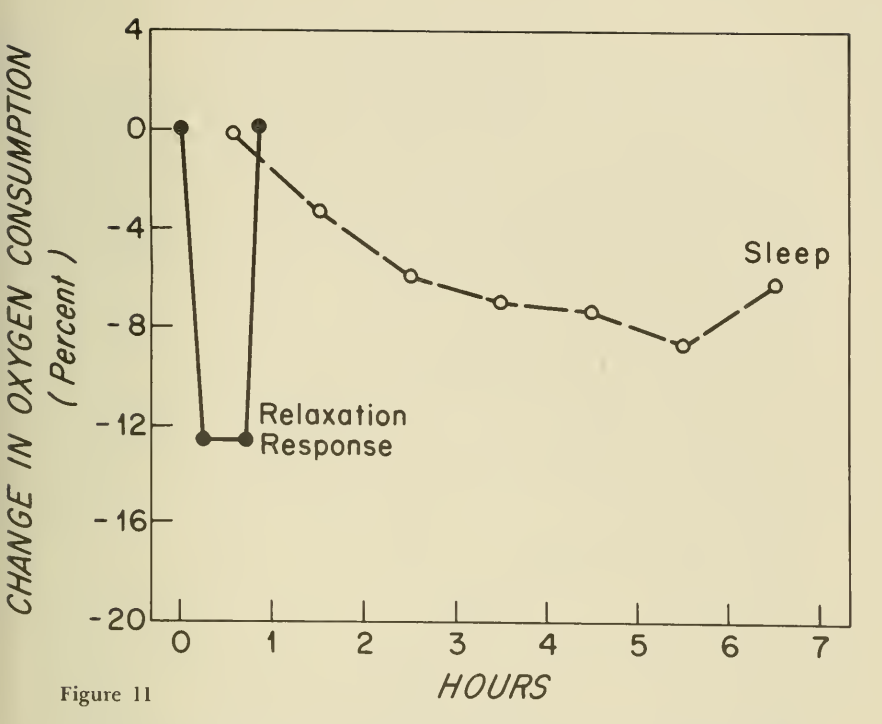
This work helped establish that relaxation is not merely a subjective feeling of calm or an absence of effort. Instead, it's a trainable process that can measurably alter the body's stress physiology. Over the past 50 years, research has continued to document these effects.
One important mechanism underlying these effects involves the autonomic nervous system. Practices such as mindful breathing and body scanning may support parasympathetic regulation, which is associated with rest and digestion. This can help the body move away from sustained stress activation and toward a more restorative state.
Evidence for this shift can be seen in a small study of pediatric nurses, nurse practitioners, and physicians. Brief relaxation practices were associated with lower self-reported stress and increased heart-rate variability, which is a physiological measure of improved parasympathetic function.
Another way to cultivate this shift is through progressive muscle relaxation. In this practice, one moves through the body, sometimes briefly tightening each muscle group before then allowing it to fully release. This practice was examined in a systematic review of 46 studies involving more than 3000 adults, which found the practice to be generally associated with reduced stress, anxiety, and depression. These benefits were often stronger when it was combined with other meditative skills, supporting the multi-skill approach used in this course.
Mindfulness may also promote relaxation by influencing the brain circuits involved in the stress response. For example, higher perceived stress has been associated with stronger resting connectivity between the amygdala and other stress-related brain regions. In a randomized trial, a three-day intensive mindfulness program reduced this functional coupling.
More broadly, systematic reviews and meta-analyses consistently report stress-related benefits from mindfulness-based programs. These include reductions in psychological distress, anxiety, and stress, along with favorable changes in cortisol, blood pressure, and heart rate.
Taken together, this research supports relaxation as a trainable meditative skill that can positively influence subjective stress, autonomic regulation, and stress-related patterns of brain activity. With regular and skillful practice, relaxation can become a more skilled and reliable capacity for responding to stress.
In Class 5 we will see that with progressive mastery of these skills we can relax into states of profound absorption, peace, and equanimity.
Allowing and noticing relief

The third skill in our 4R's cycle, following Recognition and Relaxation, is Relief.
This step is about noticing and savoring the ease that follows letting go. Through direct and careful observation we're teaching the mind that relaxing unnecessary tension yields relief and enjoyment.
There are several aspects that help define this skill.
First, and foremost, is noticing the feeling of relief and contentment, analogous to when a heavy backpack is slipped off tired shoulders or a noisy air conditioner shuts off.
Second is feeling subtly grateful as the body further softens and the mind becomes happier, more spacious, and more alert.
Third is a soft smile. Sometimes the smile arises naturally. Sometimes it is invited very gently. Note that a genuine smile is not only in the mouth. It also includes the small muscles around the eyes, so be sure to let them soften and brighten as well. From there, allow the smile to spread through the whole face, heart, and body with gladness and warmth.
Near enemies of relief
As with the other steps, Relief has a few common traps and near enemies.
- Some ease appears, but the mind wants more
- Trying to hold, grow, or prolong the pleasure
- The overefforting only introduces new tension
- Trying to deepen the relaxation by force
- Pushing residual tension away instead of grabbing at ease
- Equally counterproductive
- The body feels comfortable but attention goes hazy
- Vague or sleepy rather than bright and clear
- A common overcorrection to grabbing and forcing
- Stories added on top of noticing the relief
- Often about how the meditation is going
- Pulls attention away from perceiving relief clearly
- The corners of the mouth lift, and nothing else does
- Cheeks don't rise; eyes don't soften or gently narrow
- Manufactured and imposed on top of tension
- Clearly notices the ease that follows letting go
- Softens while remaining bright and clear
- A real smile that reaches the cheeks and eyes
Two of these deserve a note. Reflecting deeply on how your practice is going is genuinely valuable, and we recommend it outside of the formal session, where it doesn't compete with perceiving the relief itself. And the difference between a genuine and a manufactured smile is not merely poetic. Researchers who study facial expression have long distinguished between the two, as the next section describes.
The relief step as a trainable attention skill
Modern scientific research helps explain why the relief step matters. Relief is not just a pleasant afterthought or optional step. It is designed to give the nervous system a chance to more fully register the effects of the previous step of Relaxation. This is an important way to deepen learning about how unnecessary tension generates suffering, while also stabilizing the relaxation and complementing it with positive emotion from a gentle smile.
Research is increasingly documenting that positive emotions do not merely feel good in the moment. They also play a measurable role in recovery from stress. For instance, experimental evidence suggests that cultivating states such as contentment and warmth can help the cardiovascular system return to baseline more quickly after stress exposure. Positive emotion appears to reverse some of the residual arousal that stress leaves behind.
There is also evidence around the role of authentic smiling specifically.
The genuine smile we've been discussing is referred to as a Duchenne smile in research contexts, after the nineteenth-century neurologist who first studied the facial muscles involved in smiling over a hundred years ago.
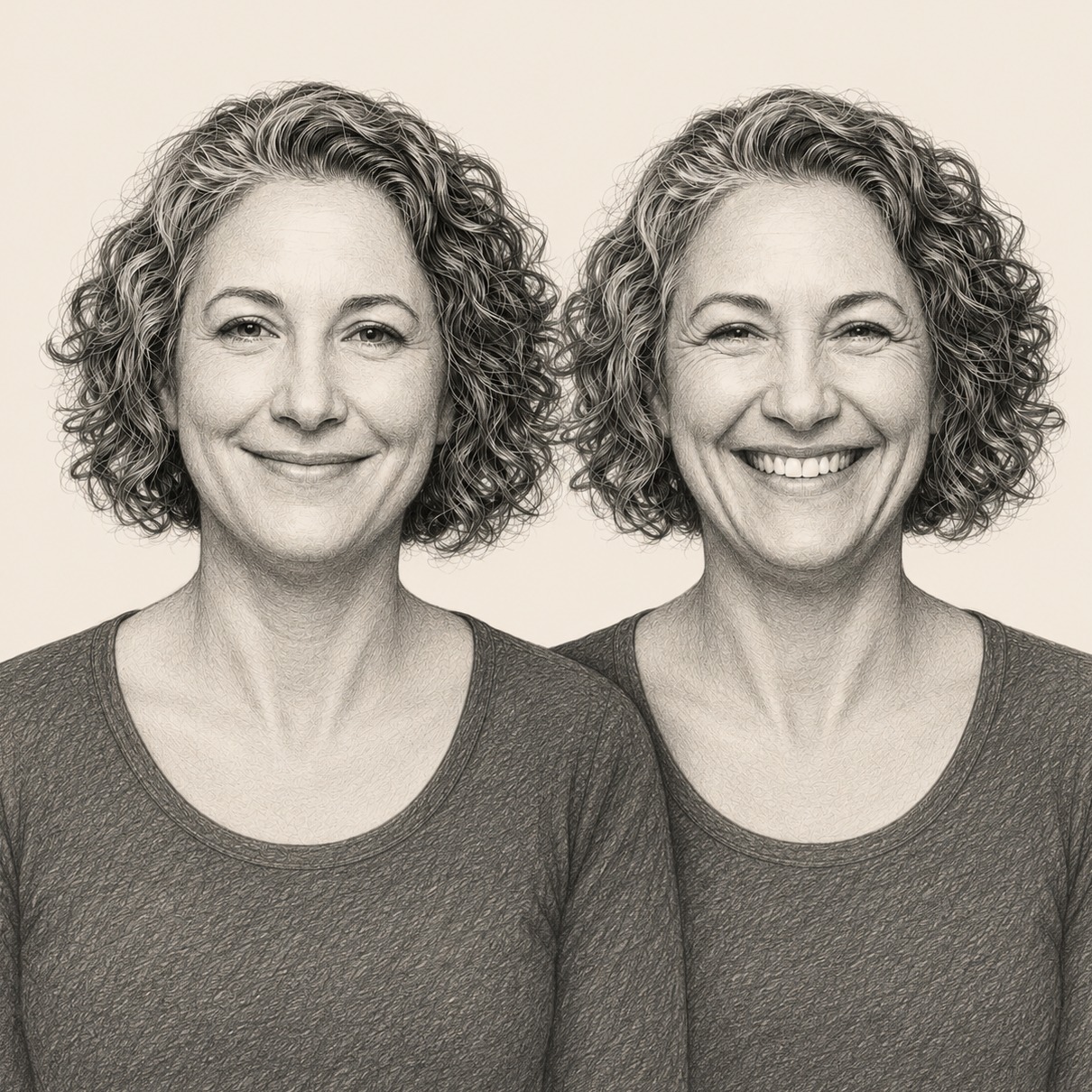
In classic studies, genuine smiles were more closely associated with enjoyment and positive emotion than false, mouth-only smiles. Smiles of enjoyment also tend to have a smoother, more natural timing, and are more recognizable to others. These effects hold across cultures. A large multi-laboratory study of nearly 4,000 participants across 19 countries found that voluntary and genuine smiling reliably both initiates and amplifies feelings of happiness.
Smiling may also help the body recover from stress. During laboratory stressors, participants who held a smiling expression showed faster heart-rate recovery afterward than those who held a neutral expression.
Returning to kindness and warmth
The final step is Return. After recognizing, relaxing, and noticing relief, we gently return to savoring the warmth and kindness.
As you practice this skill, try noticing how your mind moves as your attention comes back to warmth. Bring a gentle curiosity to the texture of your return.
Does your attention return with ease, or is there some friction? Is there warmth accompanying the movement? Are you introducing unnecessary tension?
As you perform this skill, the movement of your attention should be smooth, continuous, soft, and unhurried.
Depending on the depth of the distraction, returning may simply mean coming back to the warmth that is already available. At other times, it may be necessary to revisit the spark step, returning to the phrases, imagery, or memory that helped you access warmth and kindness in the first place.
As you Return, it can also be helpful to hold a gentle intention toward depth, where the mind leans toward more intimate contact with the warmth. This involves growing curiosity and engagement without introducing additional tension. This is also key to developing deeper meditative absorption.
Near enemies of return
Like the other skills in the 4R framework, Return has a few common traps or near enemies. These can interfere at different points in the return process, either by introducing tension into the return itself or by carrying that tension into the subsequent renewal of warmth.
- Pulling or pushing attention with a tense, jerking motion
- More like a dog yanked by the leash than a butterfly landing
- Return is meant to be a gentle reorientation
- Judging how often the mind wandered or how well it returned
- Assessing whether the meditation is going properly
- Adds pressure and pulls attention from the warmth
- Tension from a hurried return carries into the warmth
- Managing how strong it is or where it spreads next
- Warmth deepens by relaxing, not by gripping
- Going through the motions without reconnecting
- An inner smile put on, or kindness mimicked
- A performance rather than a genuine experience
- Drifting vaguely back without fully reconnecting
- Warmth in the background, attention half-present
- Lacks clarity and real engagement
- Inclines back gently, like a butterfly landing on a flower
- Re-engages fully rather than hovering nearby
- Renews interest and appreciation as savoring resumes
The remedy in each case is simpler than the near enemy. Instead of evaluating the meditation, simply return to it. Instead of forcing the appearance of warmth, allow yourself to return to it, or to spark it again more naturally. Warmth grows into absorption through relaxing tension and cultivating deeper interest, not by grabbing it more tightly.
Taken as a whole, these near enemies either introduce tension into the return, carry it into the warmth that follows, or lose clarity in dullness. In contrast, a skillful return is gentle, bright, warm, and engaged.
The return step as a trainable attention skill
Now that we've explored what skillful return looks like in practice, let's turn to the research that it is trainable. The research suggests that this ability to redirect attention responds well to practice.
For instance, a meta-analysis of over one hundred randomized controlled trials found that mindfulness practice significantly improves global cognitive function, particularly executive attention abilities such as shifting attention between objects and sustaining attention over time. These improvements were especially large among individuals initially experiencing stress, anxiety, or depression.
Psychologists have also studied what they call an "attentional blink" as a way of understanding the ability to reorient attention. The attentional blink is a brief period in which a second event is less likely to be noticed when it appears soon after the first. For instance, imagine two birds flying past a window in rapid succession. You would be likely to miss the second. It can serve as a rough measure of how fluidly attention disengages from one event and becomes available for the next.

Meditation training appears to decrease this attentional blink. In one study, participants completed three months of intensive meditation training before performing an attentional blink task. Compared to controls, they became significantly better at detecting rapidly presented visual targets. EEG recordings also suggested that their attentional resources were being allocated more efficiently.
A similar pattern was observed in a randomized waitlist-controlled study of an eight-week mindfulness program. Participants showed improved ability to detect rapidly presented targets in sequence, and these improvements were associated with increases in non-reactivity to thoughts and emotions.
Together, these findings suggest that repeated practice strengthens the brain's capacity to fluidly reorient attention after disengaging from distraction. Over time, the movement of attention back to kindness and warmth becomes smoother, quicker, and increasingly effortless.
Guided meditation
We now invite you to try practicing meditation on your own. The following is a 30-minute guided lovingkindness meditation led by Dr. Sacchet. It is the same style of practice we will continue to return to and refine over the remaining weeks of the course.
Remember, you will see the greatest progress in your meditative skills by deliberately applying everything we have described so far: sparking a feeling of kindness and warmth, savoring that warmth, and moving through the 4R's when distraction arises (recognize, relax, notice the relief, and return).
We recommend you find a time when distractions are limited and a position you can hold comfortably. This may be sitting upright on the floor or in a chair, or even lying down. As your attention will likely start to wander, remember that this is not a failure of practice. Use your distraction as feedback, and gently return to your object of warm, lovingkindness. You may press play when you are ready.
Reviewing lovingkindness meditation
Now that we've reviewed each of the four R's, let's review the overall lovingkindness meditation instructions.
We begin by sparking a feeling of kindness and warmth using a memory, image, phrase, or felt sense. Then we move to savoring that feeling in the body, appreciating the warmth and allowing attention to suffuse with warmth and collect into it.
When distraction arises, we move through the 4R cycle:
- Recognize the distraction.
- Relax the tension around both the body and the thought or feeling that distracted us.
- Notice the relief that follows, allowing a small smile.
- Return with curiosity to the feeling of warmth.
That's it. These six core meditative skills are simple enough for beginners to practice, yet deep enough to yield enormous depth as they are increasingly refined and mastered.
Let's now review 4 principles that can help us as we apply what we've learned here.
- Begin where you are.
- Take distraction as feedback not failure.
- Bring the practice into daily life.
- Connect with enjoyment and aspiration.
Beginning where you are and deepening over time
As a reminder, these skills do not have to be performed perfectly at first. They are learned gradually, by practicing them from whatever state you are already in.
It's like how learning to walk begins with awkward wobbling, and strength training often begins with a humble amount of weight. In the same way, the early stages of meditation can feel mundane, awkward, or restless. We want to reassure you that this is not a problem. Everyone starts this way.
Meditation does not require us to begin in an ideal state. We can, and must, start exactly where we are: groggy, grumpy, tense, restless, worried, or distracted.
At first, the 4R cycle may feel clumsy. A beginner might move through the cycle only three or four times in a 20-minute sit.
Over time, the cycle becomes quicker, more fluid, and more refined. Like a skilled musician or athlete, an advanced meditator learns to recognize distractions with increasing speed and subtlety, and to make increasingly precise adjustments. An intermediate meditator might catch their distractions sooner than a beginner, and complete a few dozen cycles of the 4Rs in a session.
Eventually, these adjustments can happen nearly continuously. Subtle new calibrations to awareness can occur many times a second, long before attention has drifted away entirely into distraction.
For beginners, however, it can help to slow down and attend to each step more carefully and deliberately, especially on a day when practice feels challenging.
Often the most skillful thing is not to move faster, but to become more deliberate and intimate with each step. Recognize more clearly; relax more fully; notice relief more directly, taking time to smile with the eyes, mouth, and heart; and return with deliberate ease, curiosity, and intention.
In a given session, over many repetitions of the 4R cycle, you might be surprised by how much your mind can shift. One cycle may have relatively minor effects, but across many cycles, the cumulative shift can be surprisingly large. Even if you begin meditation with significant tension, restlessness, or worry, you can often leave relaxed, open, and warm.
As your meditation skills develop, seeing those larger shifts provides experience and important data that we can learn from. Over time, this can help us learn to find the same kind of relief in minutes, or even seconds, which previously may have taken a whole session.
The 4R's are part of meditation
It's important to be comfortable with being a beginner. This means cultivating a warm orientation to not only the meditation object, but also to distractions. We can become warm about the whole 4R process itself. This is a common bottleneck which can derail the benefits of meditation. Self-criticism and doubt are major hindrances to progress, and yanking your attention back toward the warmth is agitating and self-defeating.
So, it's important to see that the 4R cycle is neither a mistake nor a detour from meditation. It is not a sign that meditation has stopped. It is an essential and inevitable part of the meditative process itself.
Once this is understood, many people find that their practice deepens. They stop treating distractions and mind-wandering as interruptions to meditation, and begin to see them as happening within meditation. When this happens, the 4R cycle shifts from unpleasant failures into opportunities for feedback, and it becomes relaxing or enjoyable in its own right.
Meditation is all 6 skills, not just sparking and savoring
Learning to see distraction as feedback and opportunity
Learning to see distraction as feedback, not failure, is foundational to practicing meditation. Once the 4R cycle is understood as part of meditation, distraction becomes easier and more rewarding to learn from.
By understanding the science of deliberate practice, we seek to maximize the quality and quantity of feedback in our training. The best way to maximize feedback and information is to look increasingly closely at our own experience, while also learning not to take things personally.
This closer attention to experience can be immensely rewarding, but can also be challenging. Much of the information you receive from fine-grained awareness will show you ways in which you are being unskillful. Moreover, by looking closely when practicing the six core meditative skills of lovingkindness meditation, you'll notice not just initial mistakes, but also second-order reactions that compound the errors significantly. For example, you might feel slightly frustrated that your mind has wandered, which could compound into strong despair or doubt in your capacity to progress.
As a useful analogy, picture yourself interacting with a junior colleague and giving them feedback on how to improve as a clinician. Ideally, they would receive the feedback impartially and with curiosity about how they could improve. They would not take it personally, as evidence that they were somehow bad or deficient.
Meditation develops this same skill of impartiality, but directed toward ourselves. It develops progressively, over time, as we start to treat each distraction less as a mistake or failure, and more as an opportunity for feedback and adjustment.
As we discussed last class, research into the psychology of learning and deliberate practice demonstrates that feedback can either help or hinder skill development, depending on how we relate to it.
Feedback is helpful when we treat it as information for learning and recalibration.
Feedback becomes harmful when we treat it as self-related evidence of failure or deficiency.
The key is learning that when the mind wanders, this does not mean you are doing the practice wrong or are incapable of meditating. On the contrary, in some sense, it means that you are doing it right, as Recognition is one of the core skills you are training.
Enjoyment
Returning to the theme of aspiration mentioned earlier, we want to emphasize that this practice is meant to be enjoyed.
We encourage you to bring a spirit of playful experimentation to your sessions, treating each sit as an opportunity to tinker and refine, rather than perform.
Some days the warmth may come easily. Some days it may feel faint or distant. Some days
the 4R's may feel smooth. Other days they may feel repetitive, awkward, or unclear.
All of this is part of the learning process.
Rather than judging the session as good or bad, see if you can stay curious. What happens if you use slightly less effort? What happens if you soften the face? What happens if you relax more fully around the thought? What happens if you let the warmth be faint, rather than trying to make it stronger? What happens if you lean into the warmth with extra curiosity?
And when motivation wavers, it can help to reconnect with your deeper aspirations for practice. Connect with why, and for whom, you wanted to be more focused, happier, and move loving. These aspirations help keep practice from becoming another task to perform. They reconnect meditation to care, self-discovery, and service to others.
Bringing the 4R's Into Daily Life
We also want to emphasize that you can benefit from working with the 4R's throughout the day. The cycle is not only for formal sitting practice. Experiment with using it whenever tension, distraction, irritation, worry, or self-criticism arises in everyday life and in your clinical practice.
A single cycle can take just a few seconds, leaving you more refreshed, relaxed, and present.
There is emerging evidence that even brief meditation can have measurable impacts in healthcare settings.

For instance, during demanding clinical shifts, engaging in a three-minute mindfulness breathing micropractice helped reduce compassion fatigue and emotional exhaustion among nurses. To address severe chronic stress and burnout among time-constrained healthcare providers, Seppala and colleagues (2014) evaluated the efficacy of a brief, 10-minute loving-kindness meditation intervention. The study demonstrated that a single 10-minute session significantly increased participants' positive emotions and their feelings of interpersonal connection toward strangers.
Brief micropractices like these support formal meditation as well. The less tension someone brings into a session, the more quickly they can go deep when they sit down for formal practice. Practicing brief 4R cycles during the day helps reduce the amount of accumulated tension that gets carried into the next sit, and can be worked into even busy schedules.
Review, daily practice and course outline
You can review the principles we learned today in more detail, and begin to solidify your understanding of the practice more deeply. As a general rule, we recommend beginning with just a few minutes a day, lengthening to up to 30 minutes. Over time, you may wish to sit even longer than this, but only do so out of wholesome motivation and aspiration.
To summarize today's class, we've reviewed why loving-kindness is an ideal practice for healthcare workers, and we reviewed the six core skills of meditation: spark, savor, recognize, relax, relief, and return.
We've also been very careful to describe both what we are doing and what we are not doing when practicing these skills, so that we don't mistake them for their near enemies.
Together, we looked at evidence that all six of these core practices are trainable and are evidence-based. We've also reviewed evidence that they have been applied in busy and challenging healthcare settings like yours.
Next class we'll go into more detail on tools for working with distraction, including the science of suppression vs acceptance, and savoring vs craving.
In the fourth class, we will review practices around gratitude and forgiveness that are incredibly valuable in their own right, and also useful during periods when we're having difficulty sparking a sense of warmth.
In the fifth class, we'll discover and review deeper aspects of meditative absorption, and in the sixth and final class, we'll look more closely at the science of compassion and burnout and how they can be directly relevant for you and your clients.
Each participant (Experiment 2, n = 79) saw both mildly and highly aversive images from the International Affective Picture System, and on labeling trials chose between two labels that best described the feeling, and then rated their distress on a 9-point scale. On trials measuring baseline responses, participants simply viewed the image. Labeling raised distress in the low-intensity condition, t(78) = −2.6, p = .011, and lowered it in the high-intensity condition, t(78) = 2.4, p = .018. Source. Based on Figure 1 and Figure 3 in Smith, J. L., & Hanni, A. A. (2019). Effects of a Savoring Intervention on Resilience and Well-Being of Older Adults. Journal of Applied Gerontology, 38(1), 137–152.
Data points reflect mean ratings on standardized psychological questionnaires using a 7-point scale. Source. Neff, K. D., & Germer, C. K. (2013). A pilot study and randomized controlled trial of the Mindful Self-Compassion program. Journal of Clinical Psychology, 69(1), 28–44.
Values are calculated from the pre- and post-course means in Study 2, Table 2, and rounded to whole percentages. Mindful Self-Compassion is a broader program that includes meditation, reflective exercises, and informal practices. Source. Figure 11 in Benson, H., & Klipper, M. Z. (1975). The relaxation response. Morrow. Percent change in oxygen consumption during the relaxation response, compared with the gradual decline over several hours of sleep. Source. Based on Figure 1 and Table III in Del Re, A. C., Flückiger, C., Goldberg, S. B., & Hoyt, W. T. (2013). Monitoring mindfulness practice quality: An important consideration in mindfulness practice. Psychotherapy Research, 23(1), 54–66.
The dotted line shows the overall trend, with individual ratings shown in blue. Participants in an eight-week MBSR course rated the quality of their own practice each week on the Practice Quality–Mindfulness scale. The model’s average gain was 2.02 points a week (SE 0.42), but the between-person variance in that slope was itself significant (χ² = 46.6, p < .01). Source. Based on Table 1 of Hasenkamp, W., Wilson-Mendenhall, C. D., Duncan, E., & Barsalou, L. W. (2012). Mind wandering and attention during focused meditation: A fine-grained temporal analysis of fluctuating cognitive states. NeuroImage, 59(1), 750–760.
Fourteen experienced meditators pressed a button whenever they noticed their mind had wandered. Circles sit at the published peak locations and are sized to the published volumes. Note that the awareness contrast used a different threshold, so the sizes of the clusters are less comparable, and still includes button-press activity. Source. Based on Figure 1 in Hasenkamp, W., Wilson-Mendenhall, C. D., Duncan, E., & Barsalou, L. W. (2012). Mind wandering and attention during focused meditation: A fine-grained temporal analysis of fluctuating cognitive states. NeuroImage, 59(1), 750–760.
To test this model, the researchers had experienced meditators press a button every time they became aware that their mind had wandered, then they analyzed the brain activity surrounding each button press, which confirmed that each of the four phases had its own distinct brain signature.
Notes
- Hasenkamp, W., Wilson-Mendenhall, C. D., Duncan, E., & Barsalou, L. W. (2012). Mind wandering and attention during focused meditation: A fine-grained temporal analysis of fluctuating cognitive states. NeuroImage, 59(1), 750–760. ↩
- Lomas, T., Cartwright, T., Edginton, T., & Ridge, D. (2015). A qualitative analysis of experiential challenges associated with meditation practice. Mindfulness, 6(4), 848–860. ↩
- Banerjee, M., Cavanagh, K., & Strauss, C. (2017). A qualitative study with healthcare staff exploring the facilitators and barriers to engaging in a self-help mindfulness-based intervention. Mindfulness, 8(6), 1653–1664. ↩
- Dahl, C. J., Lutz, A., & Davidson, R. J. (2015). Reconstructing and deconstructing the self: Cognitive mechanisms in meditation practice. Trends in Cognitive Sciences, 19(9), 515–523. ↩
- Fredrickson, B. L., Cohn, M. A., Coffey, K. A., Pek, J., & Finkel, S. M. (2008). Open hearts build lives: Positive emotions, induced through loving-kindness meditation, build consequential personal resources. Journal of Personality and Social Psychology, 95(5), 1045–1062. ↩
- Van Cappellen, P., Catalino, L. I., & Fredrickson, B. L. (2020). A new micro-intervention to increase the enjoyment and continued practice of meditation. Emotion, 20(8), 1332–1343. ↩
- Galante, J., Galante, I., Bekkers, M.-J., & Gallacher, J. (2014). Effect of kindness-based meditation on health and well-being: A systematic review and meta-analysis. Journal of Consulting and Clinical Psychology, 82(6), 1101–1114. ↩
- Zeng, X., Chiu, C. P. K., Wang, R., Oei, T. P. S., & Leung, F. Y. K. (2015). The effect of loving-kindness meditation on positive emotions: A meta-analytic review. Frontiers in Psychology, 6. ↩
- Petrovic, J., Mettler, J., Cho, S., & Heath, N. L. (2024). The effects of loving-kindness interventions on positive and negative mental health outcomes: A systematic review and meta-analysis. Clinical Psychology Review, 110, 102433. ↩
- Jazaieri, H., McGonigal, K., Jinpa, T., Doty, J. R., Gross, J. J., & Goldin, P. R. (2014). A randomized controlled trial of compassion cultivation training: Effects on mindfulness, affect, and emotion regulation. Motivation and Emotion, 38(1), 23–35. ↩
- Zheng, Y., et al. (2023). Effects of loving-kindness and compassion meditation on anxiety: A systematic review and meta-analysis. Mindfulness, 14(5), 1021–1037. ↩
- Gu, X., et al. (2022). The effects of loving-kindness and compassion meditation on life satisfaction: A systematic review and meta-analysis. Applied Psychology: Health and Well-Being, 14(3), 1081–1101. ↩
- Del Re, A. C., Flückiger, C., Goldberg, S. B., & Hoyt, W. T. (2013). Monitoring mindfulness practice quality: An important consideration in mindfulness practice. Psychotherapy Research, 23(1), 54–66. ↩
- Goldberg et al. (2014) — on practice quality and outcomes. Full citation to confirm. ↩
- Goldberg et al. (2020) — on practice time, quality, and outcomes in mindfulness-based stress reduction. Full citation to confirm. ↩
- Strohmaier, S., & Goldberg, S. B. (2024). Longitudinal increases in mindfulness practice quality are associated with changes in psychological outcomes and not vice versa – a brief report. Current Psychology, 43(20), 18517–18520. ↩
- Zeng, X., Zheng, Y., Gu, X., Wang, R., & Oei, T. P. (2023). Meditation quality matters: Effects of loving-kindness and compassion meditations on subjective well-being are associated with meditation quality. Journal of Happiness Studies, 24(1), 211–229. ↩
- Andreu, C. I., Navarrete, J., Roca, P., Baños, R. M., & Cebolla, A. (2022). Effects of quality practice on a compassion cultivation training: Somatic and imagery levels of analysis. Mindfulness, 13(12), 3070–3079. ↩
- Navarrete, J., et al. (2021). Compassion-based meditation quality practice and its impact on the positive attitudes toward others. Mindfulness, 12(8), 1940–1953. ↩
- Ericsson, K. A. (2006). The influence of experience and deliberate practice on the development of superior expert performance. The Cambridge Handbook of Expertise and Expert Performance (pp. 683–703). Cambridge University Press. ↩
- Ericsson, A. (2016). Peak: Secrets from the new science of expertise. Audible Studios on Brilliance Audio. ↩
- Whitton, N. (2022). Play and Learning in Adulthood: Reimagining Pedagogy and the Politics of Education. Springer International Publishing. ↩
- Diaz-Varela, A., & Wright, L. H. V. (2019). Play for adults: Play-based approaches in teacher training. ↩
- Gray, P. (2017). What exactly is play, and why is it such a powerful vehicle for learning? Topics in Language Disorders, 37(3), 217–228. ↩
- Sparby, T., & Ott, U. (2018). A qualitative study of motivations for meditation in anthroposophic practitioners. PLOS ONE, 13(9), e0203184. ↩
- Lam et al. (2023) — on altruistic motivation and sustained meditation practice. Full citation to confirm. ↩
- Goel, S., Angeli, F., Dhirar, N., Singla, N., & Ruwaard, D. (2018). What motivates medical students to select medical studies: A systematic literature review. BMC Medical Education, 18(1), 16. ↩
- Rother, J. F., Seer, M., Stegt, S., & Raupach, T. (2024). Explicit motives and personality characteristics in first year medical students: A multicentre quantitative study using McClelland's motive disposition theory. BMC Medical Education, 24(1), 755. ↩
- Bryant, F. B., & Veroff, J. (2007) — on savoring as a distinct, trainable skill. Full citation to confirm. ↩
- Klibert, J. J., Sturz, B. R., LeLeux-LaBarge, K., Hatton, A., Smalley, K. B., & Warren, J. C. (2022). Savoring interventions increase positive emotions after a social-evaluative hassle. Frontiers in Psychology, 13, 791040. ↩
- Smith, J. L., & Hanni, A. A. (2019). Effects of a Savoring Intervention on Resilience and Well-Being of Older Adults. Journal of Applied Gerontology, 38(1), 137–152. ↩
- Smith, J. L., & Hollinger-Smith, L. (2015). Savoring, resilience, and psychological well-being in older adults. Aging & Mental Health, 19(3), 192–200. ↩
- Chen, P., Tung, H., Wu, Y., & Sie, J. (2026). Effectiveness of savoring interventions: A systematic review and meta-analysis of randomized controlled trials. Applied Psychology: Health and Well-Being, 18(2), e70134. ↩
- Levy-Gigi, E., & Shamay-Tsoory, S. (2022). Affect labeling: The role of timing and intensity. PLOS ONE, 17(12), e0279303. ↩
- Nook, E. C., Satpute, A. B., & Ochsner, K. N. (2021). Emotion naming impedes both cognitive reappraisal and mindful acceptance strategies of emotion regulation. Affective Science, 2(2), 187–198. ↩
- Lin, Y., Eckerle, W. D., Peng, L. W., & Moser, J. S. (2019). On variation in mindfulness training: A multimodal study of brief open monitoring meditation on error monitoring. Brain Sciences, 9(9), 226. ↩
- Neff, K. D., & Dahm, K. A. (2015). Self-compassion: What it is, what it does, and how it relates to mindfulness. In Handbook of Mindfulness and Self-Regulation (pp. 121–137). Springer New York. ↩
- Mao, L., Li, P., Wu, Y., Luo, L., & Hu, M. (2023). The effectiveness of mindfulness-based interventions for ruminative thinking: A systematic review and meta-analysis of randomized controlled trials. Journal of Affective Disorders, 321, 83–95. ↩
- Benson, H., & Klipper, M. Z. (1975). The Relaxation Response. Morrow. ↩
- Wolfe, A. H. J., Hinds, P. S., Du Plessis, A. J., Gordish-Dressman, H., Freedenberg, V., & Soghier, L. (2024). Mindfulness exercises reduce acute physiologic stress among female clinicians. Critical Care Explorations, 6(11), e1171. ↩
- Muhammad Khir, S., Wan Mohd Yunus, W. M. A., Mahmud, N., Wang, R., Panatik, S., Mohd Sukor, M. S., & Nordin, N. (2024). Efficacy of progressive muscle relaxation in adults for stress, anxiety, and depression: A systematic review. Psychology Research and Behavior Management, 17, 345–365. ↩
- Taren, A. A., et al. (2015). Mindfulness meditation training alters stress-related amygdala resting state functional connectivity: A randomized controlled trial. Social Cognitive and Affective Neuroscience, 10(12), 1758–1768. ↩
- Goyal et al. (2014) — full citation to confirm; Galante, J., Friedrich, C., Collaboration of Mindfulness Trials (CoMinT), Dalgleish, T., Jones, P. B., & White, I. R. (2023). Individual participant data systematic review and meta-analysis of randomised controlled trials assessing adult mindfulness-based programmes for mental health promotion in non-clinical settings. Nature Mental Health, 1(7), 462–476; Pascoe, M. C., Thompson, D. R., Jenkins, Z. M., & Ski, C. F. (2017). Mindfulness mediates the physiological markers of stress: Systematic review and meta-analysis. Journal of Psychiatric Research, 95, 156–178. ↩
- Fredrickson, B. L., & Levenson, R. W. (1998). Positive emotions speed recovery from the cardiovascular sequelae of negative emotions. Cognition and Emotion, 12(2), 191–220. ↩
- Fredrickson, B. L., Mancuso, R. A., Branigan, C., & Tugade, M. M. (2000). The undoing effect of positive emotions. Motivation and Emotion, 24(4), 237–258. ↩
- Frank, M. G., Ekman, P., & Friesen, W. V. (1993). Behavioral markers and recognizability of the smile of enjoyment. Journal of Personality and Social Psychology, 64(1), 83–93. ↩
- Ekman, P., Davidson, R. J., & Friesen, W. V. (1990). The Duchenne smile: Emotional expression and brain physiology: II. Journal of Personality and Social Psychology, 58(2), 342–353. ↩
- Soussignan, R. (2002). Duchenne smile, emotional experience, and autonomic reactivity: A test of the facial feedback hypothesis. Emotion, 2(1), 52–74. ↩
- Coles, N. A., et al. (2022). A multi-lab test of the facial feedback hypothesis by the many smiles collaboration. Nature Human Behaviour, 6(12), 1731–1742. ↩
- Kraft, T. L., & Pressman, S. D. (2012). Grin and bear it: The influence of manipulated facial expression on the stress response. Psychological Science, 23(11), 1372–1378. ↩
- Zainal, N. H., & Newman, M. G. (2023). A randomized controlled trial of a 14-day mindfulness ecological momentary intervention (MEMI) for generalized anxiety disorder. European Psychiatry, 66(1), e12. ↩
- Slagter, H. A., Lutz, A., Greischar, L. L., Francis, A. D., Nieuwenhuis, S., Davis, J. M., & Davidson, R. J. (2007). Mental training affects distribution of limited brain resources. PLoS Biology, 5(6), e138. ↩
- Wang, Y., et al. (2022). Mindful non-reactivity is associated with improved accuracy in attentional blink testing: A randomized controlled trial. Current Psychology, 41(12), 8908–8920. ↩
- Owens, R. A., Alfes, C., Evans, S., Wyka, K., & Fitzpatrick, J. J. (2020). An exploratory study of a 3-minute mindfulness intervention on compassion fatigue in nurses. Holistic Nursing Practice, 34(5), 274–281. ↩
- Seppälä, E. M., et al. (2014). Breathing-based meditation decreases posttraumatic stress disorder symptoms in U.S. military veterans: A randomized controlled longitudinal study. Journal of Traumatic Stress, 27(4), 397–405. ↩
- Benson, H., & Klipper, M. Z. (1975). The relaxation response. Morrow. Figure 10. ↩